



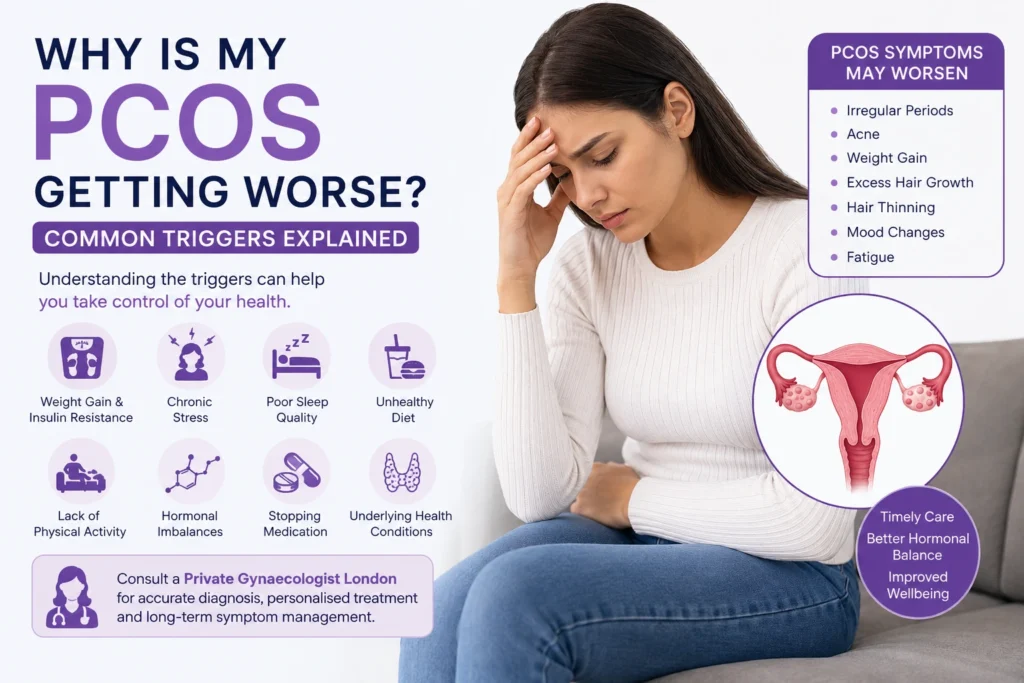
Polycystic Ovary Syndrome (PCOS) is a long-term hormonal condition that affects millions of women worldwide. While some women experience stable symptoms, others notice that their condition seems to worsen over time. If you’ve recently found yourself asking, “Why is my PCOS getting worse?”, you’re not alone.
The good news is that worsening symptoms do not necessarily mean your condition is becoming untreatable. PCOS symptoms often fluctuate due to hormonal changes, lifestyle factors, and underlying health conditions. Understanding these triggers can help you take control of your health and receive the right treatment.
At Well Women Clinic, our experienced private gynaecologists in London provide personalised assessments and evidence-based PCOS treatment plans tailored to each patient’s needs.
What Is PCOS?
Polycystic Ovary Syndrome (PCOS) is a hormonal disorder that affects how the ovaries function. Women with PCOS may experience:
- Irregular or absent periods
- Acne
- Excess facial or body hair
- Weight gain
- Difficulty losing weight
- Hair thinning
- Fertility problems
- Ovarian cysts
- Mood changes
Every woman’s experience with PCOS is different, and symptoms can change throughout life.
Why Can PCOS Symptoms Get Worse?
PCOS itself doesn’t usually “progress” like some medical conditions, but several factors can make symptoms more noticeable or difficult to manage.
1. Weight Gain and Insulin Resistance
One of the most common reasons PCOS symptoms worsen is increasing insulin resistance.
Many women with PCOS produce higher levels of insulin. Excess insulin stimulates the ovaries to produce more androgens (male hormones), leading to symptoms such as:
- Irregular periods
- Acne
- Excess hair growth
- Weight gain
Unfortunately, weight gain can also increase insulin resistance, creating a cycle that becomes harder to break.
Even a small increase in weight may affect hormone balance.
2. Increased Stress
Chronic stress affects hormone production throughout the body.
High stress levels increase cortisol, the body’s stress hormone, which may contribute to:
- Irregular menstrual cycles
- Difficulty sleeping
- Increased cravings
- Weight gain
- Fatigue
Stress does not cause PCOS, but it can make symptoms significantly worse.
3. Poor Sleep Quality
Many women underestimate how important sleep is for hormone regulation.
Lack of quality sleep may:
- Increase insulin resistance
- Raise cortisol levels
- Increase appetite
- Affect ovulation
- Make weight management more difficult
Poor sleep can therefore worsen existing PCOS symptoms.
4. Hormonal Changes with Age
Hormones naturally change throughout a woman’s life.
Symptoms may change during:
- Your twenties
- Pregnancy
- After childbirth
- Perimenopause
- Menopause
Some women notice improvement in certain symptoms, while others experience worsening menstrual irregularities or metabolic changes.
5. Diet High in Processed Foods
Highly processed foods and sugary drinks may contribute to:
- Blood sugar spikes
- Increased insulin production
- Weight gain
- Inflammation
Although no single food causes PCOS, a balanced diet may help improve symptom control.
6. Lack of Physical Activity
Regular exercise supports hormone balance by improving insulin sensitivity.
Without enough physical activity, women may experience:
- Weight gain
- Increased insulin resistance
- Reduced energy
- Poor metabolic health
Even moderate exercise several times each week may provide benefits.
7. Stopping Hormonal Medication
Some women notice worsening symptoms after stopping:
- The contraceptive pill
- Hormonal coils
- Other hormone treatments
This does not necessarily mean PCOS has worsened—it often reflects the return of underlying hormonal imbalance that was previously being managed by medication.
8. Other Medical Conditions
Sometimes worsening symptoms are not caused by PCOS alone.
Other conditions that may mimic or worsen PCOS include:
- Thyroid disorders
- High prolactin levels
- Endometriosis
- Fibroids
- Ovarian cysts unrelated to PCOS
- Adrenal gland disorders
A thorough assessment is important if symptoms change suddenly.
Signs Your PCOS May Need Reassessment
You should arrange a review if you notice:
- Periods becoming increasingly irregular
- Heavy menstrual bleeding
- Rapid weight gain
- Severe acne
- Excess facial hair growth
- Hair thinning
- Difficulty becoming pregnant
- Pelvic pain
- Persistent fatigue
- New symptoms you haven’t experienced before
A specialist assessment can help identify whether PCOS or another condition is responsible.
How Is Worsening PCOS Diagnosed?
If you are experiencing serious signs of PCOS or your symptoms are worsening, your consultant may recommend several investigations to identify the underlying cause and determine the most appropriate treatment.
Medical History
You’ll discuss:
- Menstrual cycle
- Symptoms
- Fertility plans
- Family history
- Lifestyle factors
Blood Tests
Blood tests may assess:
- Testosterone
- Oestrogen
- LH and FSH
- Thyroid hormones
- Blood glucose
- HbA1c
- Insulin levels
Pelvic Ultrasound
Ultrasound can evaluate:
- Ovarian appearance
- Uterus
- Fibroids
- Endometrial lining
Can PCOS Be Controlled?
Although there is currently no permanent cure for PCOS, symptoms can usually be managed successfully.
Treatment depends on:
- Your age
- Symptoms
- Fertility goals
- Overall health
Treatment Options for PCOS
Lifestyle Changes
Lifestyle modifications remain one of the most effective ways to improve PCOS symptoms.
These include:
- Healthy eating
- Regular exercise
- Weight management
- Stress reduction
- Good sleep habits
Even modest weight loss may improve hormone balance and menstrual regularity.
Hormonal Treatment
Hormonal treatments may help regulate periods and reduce androgen-related symptoms.
Depending on your needs, your consultant may recommend:
- Combined oral contraceptive pill
- Progesterone therapy
- Hormonal intrauterine system (IUS)
Insulin Management
Some women benefit from medication that improves insulin sensitivity.
Improving insulin resistance may also help regulate ovulation and menstrual cycles.
Fertility Treatment
If you’re planning a pregnancy, treatment focuses on encouraging ovulation.
Options may include:
- Ovulation induction medication
- Fertility monitoring
- Referral for fertility treatment when appropriate
Can Lifestyle Really Make a Difference?
Yes.
Research consistently shows that healthy lifestyle habits can significantly improve PCOS symptoms.
Helpful strategies include:
- Choosing whole foods
- Eating plenty of vegetables
- Limiting sugary snacks and drinks
- Exercising regularly
- Managing stress
- Getting 7–9 hours of sleep each night
- Attending regular medical reviews
Small, sustainable changes often produce better long-term results than restrictive diets.
When Should You See a Private Gynaecologist?
You should consider seeing a private gynaecologist in London if you experience:
- Persistent irregular periods
- Difficulty conceiving
- Heavy menstrual bleeding
- Severe acne
- Excess hair growth
- Pelvic pain
- Rapid worsening of symptoms
Early assessment can help identify the cause and prevent long-term complications.
How Well Women Clinic Can Help
At Well Women Clinic, our experienced private gynaecologists in London provide compassionate, consultant-led care for women with PCOS.
Our services include:
- Comprehensive PCOS assessment
- Hormone testing
- Pelvic ultrasound referrals
- Personalised treatment plans
- Fertility advice
- Menstrual disorder management
- Long-term monitoring and support
We understand that every woman’s experience with PCOS is unique, which is why we create treatment plans tailored to your health goals and lifestyle.
Frequently Asked Questions
Can PCOS suddenly get worse?
PCOS symptoms can become more noticeable due to weight gain, stress, hormonal changes, poor sleep, or insulin resistance rather than the condition itself rapidly progressing.
Does stress make PCOS worse?
Yes. Chronic stress may increase cortisol levels, which can contribute to hormonal imbalance and worsen symptoms such as irregular periods and weight gain.
Can losing weight improve PCOS?
For many women, even modest weight loss can improve insulin sensitivity, regulate menstrual cycles, and reduce symptoms.
Should I seek specialist care if my symptoms change?
Yes. If your symptoms become more severe or you develop new concerns, consulting a private gynaecologist can help identify the cause and recommend appropriate treatment.
Take Control of Your PCOS
If your PCOS symptoms have become more difficult to manage, you don’t have to face them alone. At Well Women Clinic, our experienced private gynaecologists in London provide expert diagnosis, personalised treatment, and ongoing support to help you manage PCOS and improve your long-term health. Book a consultation today to receive compassionate, evidence-based care tailored to your individual needs.