



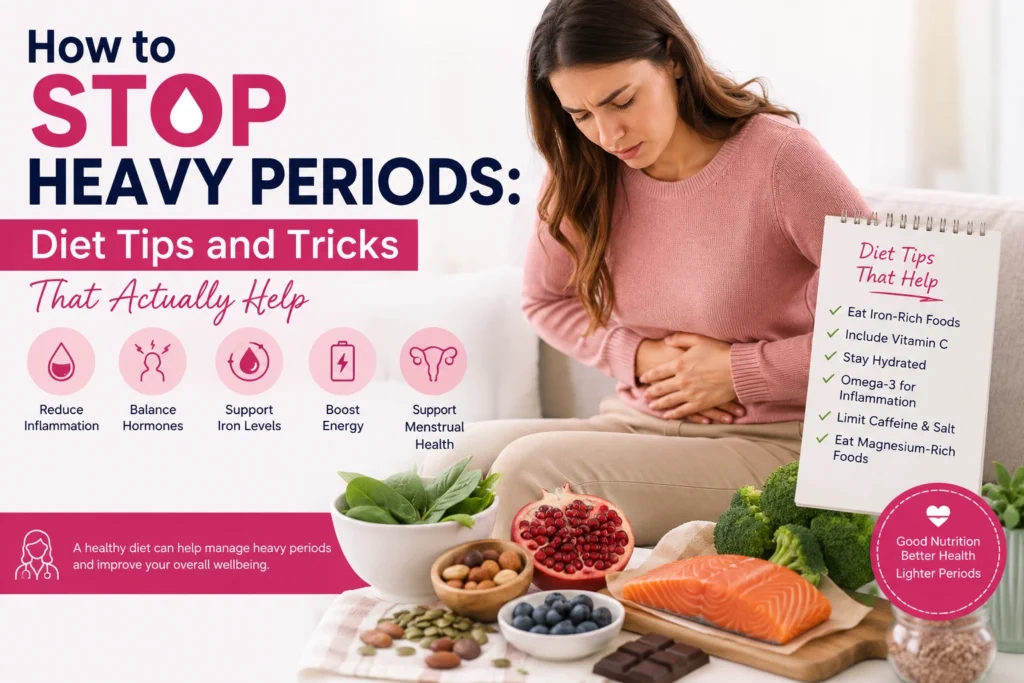
If you’re searching for how to stop heavy periods, here’s the honest answer first: no food or supplement stops heavy bleeding on its own. But the right diet and a few practical habits can ease the symptoms that come with it, fatigue, low iron, and cramping, while you work out whether you need medical treatment. This guide covers what genuinely helps, what’s just a myth, and when it’s time to see a gynaecologist.
Key Takeaways
- No diet or food can stop heavy bleeding by itself. There’s no clinical evidence for this.
- Diet can help manage the side effects of heavy periods, mainly fatigue and iron-deficiency anaemia.
- Vitamin C helps your body absorb iron, which heavy bleeding depletes.
- Iron-rich foods, hydration, and rest are the main diet-based tools that make a real difference.
- Home tricks like heat pads, menstrual cups, and period pants manage comfort, not blood volume.
- Heavy periods lasting more than seven days, or soaking a pad within an hour, need a doctor’s assessment.
- Sudden heavy bleeding can signal fibroids, endometriosis, or another condition worth investigating.
What Actually Counts as a Heavy Period?
Periods vary a lot between women, so “heavy” is relative. As a general guide, your period counts as heavy if it lasts more than seven days, or if you’re regularly soaking through a pad or tampon within an hour. Passing large clots, needing two sanitary products at once, or bleeding through onto clothes or bedding are also signs your bleeding is heavier than average.
Around half of women with heavy periods have no identifiable cause. In the other half, an underlying condition, such as fibroids, endometriosis, or polyps, is usually responsible.
Can Diet Really Stop Heavy Periods?
No. This is worth saying plainly, because a lot of content online implies otherwise. There is no food, drink, or supplement proven to reduce menstrual blood loss on its own. What diet can do is support your body through the side effects heavy bleeding causes, particularly the risk of iron-deficiency anaemia. Many women searching for cure for heavy periods wonder whether changing their diet can help
Foods That Genuinely Help
Iron-rich foods. Heavy bleeding means you’re losing more iron than usual, which can lead to anaemia, fatigue, and breathlessness. Build meals around lean beef, chicken, turkey, oysters, beans, spinach, and tofu.
Vitamin C-rich foods. Vitamin C helps your body absorb the iron you eat. Pair iron-rich meals with citrus fruits, kiwi, strawberries, broccoli, peppers, or a glass of tomato juice.
Water. Heavy blood loss lowers your overall blood volume. Drinking a few extra glasses of water on your heaviest days helps your body keep up.
If getting enough iron and vitamin C through food feels difficult, supplements are an option, but speak to your GP first. They can check whether you actually need them and rule out interactions with any other medication.
Foods and Habits That Don’t Help (Despite the Claims)
A few “hacks” circulate online that aren’t backed by evidence. Drinking vinegar to stop your period is one; there’s no research supporting it. Diet alone changing your cycle length or flow is another persistent myth. Be cautious of anything promising to “stop” a period through food alone; it’s simply not how menstrual bleeding works.
Practical Tricks Beyond Diet
Diet is only part of the picture. These habits won’t reduce blood loss, but they make heavy periods easier to manage day to day:
- Heat pads relax cramping muscles and ease pain.
- Menstrual cups hold more blood than pads or tampons, meaning fewer changes.
- Period pants worn at night add an extra layer of protection against leaks.
- Sleeping on your side, knees bent, reduces pressure on your abdomen compared with sleeping on your front.
- Rest and gentle exercise, like yoga, help manage fatigue and stress without overexerting your body.
- Cooking in a cast-iron pot can modestly boost the iron content of moist foods like sauces and stews, though it shouldn’t replace a proper iron-rich diet.
Diet and Lifestyle Support at a Glance
| Approach | What it does | What it doesn’t do |
|---|---|---|
| Iron-rich foods | Replaces iron lost through bleeding, reduces anaemia risk | Doesn’t reduce blood volume or flow |
| Vitamin C-rich foods | Improves iron absorption from food | Doesn’t stop bleeding |
| Hydration | Maintains blood volume, reduces fatigue | Doesn’t shorten period length |
| Menstrual cups / period pants | Manages comfort and leaks | Doesn’t reduce actual blood loss |
| Heat pads | Eases cramping and pain | No effect on bleeding volume |
| Medical treatment (IUD, tranexamic acid, etc.) | Can genuinely reduce bleeding | Requires a doctor’s assessment first |
When Diet Isn’t Enough — Signs You Need to See a Doctor
Diet and home care can only go so far. See a doctor if you notice any of the following:
- Periods lasting longer than seven days
- Soaking through a pad or tampon within an hour
- Large clots, roughly the size of a 10p coin or bigger
- Bleeding between periods or after sex
- Ongoing pelvic pain or pressure
- Extreme tiredness, breathlessness, or pale skin, all signs of anaemia
- Sudden, unexplained heavy bleeding, especially if you’re near or past menopause
Sudden changes in bleeding, particularly around perimenopause or after menopause, always warrant an urgent GP or gynaecologist assessment, since these can occasionally signal something more serious.
Getting a Proper Diagnosis
If diet and home remedies aren’t cutting it, the next step is finding out why your periods are heavy. This usually involves a discussion of your symptoms, a blood test to check for anaemia, and sometimes a pelvic ultrasound scan to check for fibroids, polyps, or other causes.
At Well Women Clinic, Mr Nilesh Agarwal provides full assessment and treatment for heavy periods in London, from blood tests and ultrasound scans through to medication, hormonal IUDs, or surgical options where needed. No GP referral is needed, and most patients are seen within a few days.
FAQs
What foods stop heavy periods?
No food stops heavy periods. Iron and vitamin C-rich foods help manage the side effects, like anaemia and fatigue, but they don’t reduce blood flow. Try Supplementing
Does drinking more water help with heavy periods?
Yes, indirectly. Staying hydrated helps maintain your blood volume, which supports your body while you’re losing more blood than usual.
How many pads a day is normal during a heavy period?
There’s no fixed number, since periods vary between women. As a guide, soaking through a pad within an hour is a sign your bleeding counts as heavy.
Can heavy periods cause fatigue?
Yes. Heavy bleeding is the most common cause of iron-deficiency anaemia, which leads to tiredness, breathlessness, and headaches.
Why are my periods suddenly heavier than usual?
This can be due to natural hormone changes, stopping the contraceptive pill, or a copper IUD. It can also signal an underlying condition like fibroids or endometriosis, so it’s worth getting checked if it persists.