



Home > GYNAECOLOGY SERVICES > PCOS SERVICE
Gynaecology Services
Enquire Now
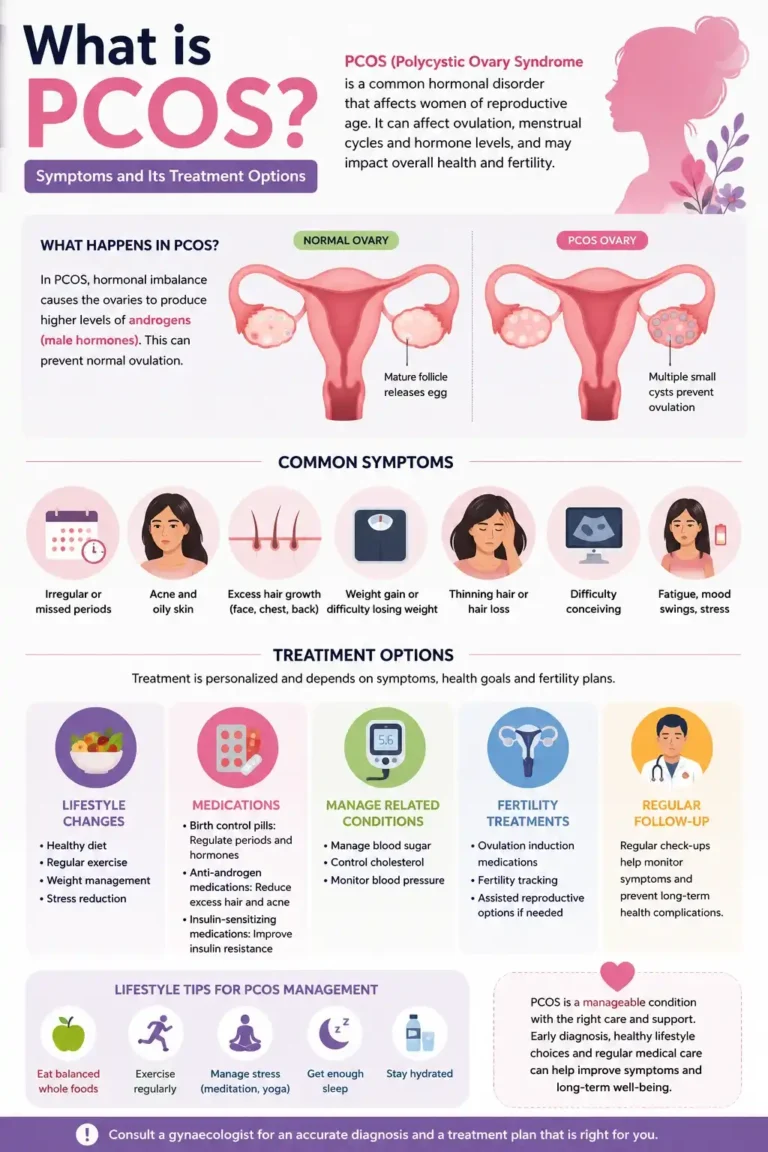
What is PCOS,Symptoms and Its Treatment Options
It is a condition caused due to hormonal imbalance and genetics. Early diagnosis and treatment can help control the symptoms and prevent long-term problems. Otherwise, it may also lead to diabetes and heart diseases.
PCOS is a hormonal condition caused by a mix of genetics and hormone imbalance. It affects how the ovaries release eggs. Many women have PCOS without knowing it, since symptoms vary widely from person to person.
Left untreated, PCOS can raise the risk of type 2 diabetes and heart disease later in life. Early diagnosis helps control symptoms and protect long-term health.
How Is PCOS Diagnosed?
Doctors use the Rotterdam criteria to diagnose PCOS. A diagnosis needs at least two of these three findings:
- Irregular or absent ovulation
- High levels of male hormones (androgens), shown in blood tests or symptoms like acne and excess hair
- Polycystic ovaries seen on an ultrasound scan
A full assessment at Well Women Clinic includes a consultation, blood tests (LH, FSH, DHEAs, HbA1c, thyroid function, prolactin, testosterone), a pelvic ultrasound scan, and a detailed written report.
What are the symptoms?
Acne
Weight gain and trouble losing weight.
Extra hair on the face and body.
Thinning hair on the scalp.
Irregular periods.
Depression
How is it treated?
PCO cannot be resolved completely but managing your weight can help you in decreasing the symptoms .You can consult a dietician for this. Healthy Food and Regular exercise is a must and will bring changes definitely. Regular health checkups and pelvic scans are also necessary.
PCOS Diagnosis and Treatment at a Glance
| Aspect | Detail |
|---|---|
| Diagnostic Method | Rotterdam criteria: 2 of 3 features required |
| Key Blood Tests | LH, FSH, DHEAs, HbA1c, thyroid function, prolactin, testosterone |
| Imaging | Pelvic ultrasound scan |
| GP Referral Required | No |
| First-line Management | Weight management, diet, and regular exercise |
| Medical Options | Hormonal treatment, metformin, ovulation induction for fertility |
| Long-term Health Risk if Untreated | Higher risk of type 2 diabetes and heart disease |
| Can PCOS be Cured? | No, but symptoms can be well managed |
| Typical Wait for Appointment | A few days |
What do we offer?
Consultation
LH, FSH, DHEAs, HbA1C
Thyroid function, prolactin, testosterone
Pelvic ultrasound scan
Detailed written report
How Is PCOS Treated?
PCOS cannot be fully resolved, but symptoms can be well managed. Treatment is built around each woman’s symptoms and goals.
- Weight management — Even a small reduction in weight can ease symptoms. A dietician can help build a realistic plan.
- Healthy diet and regular exercise — These bring measurable improvement to hormone balance over time.
- Hormonal treatment — Can regulate periods and reduce acne or excess hair growth.
- Metformin — Sometimes used to improve insulin sensitivity.
- Fertility support — Ovulation induction and monitoring for women trying to conceive.
- Regular health checks — Pelvic scans and check-ups track progress and catch complications early.
| Diagnostic Method | Rotterdam criteria: 2 of 3 features required |
|---|---|
| Key Blood Tests | LH, FSH, DHEAs, HbA1c, thyroid function, prolactin, testosterone |
| Imaging | Pelvic ultrasound scan |
| GP Referral Required | No |
| First-line Management | Weight management, diet, and regular exercise |
| Medical Options | Hormonal treatment, metformin, ovulation induction for fertility |
| Long-term Health Risk if Untreated | Higher risk of type 2 diabetes and heart disease |
| Can PCOS be Cured? | No, but symptoms can be well managed |
| Typical Wait for Appointment | A few days |
Our Insurance Approved Consultant













Frequently Asked Questions
PCOS is caused by a combination of hormonal imbalance and genetics. The exact cause is not fully understood, but family history plays a role.
No. PCOS cannot be fully resolved, but symptoms can be controlled through weight management, diet, exercise, and medical treatment.
Yes. PCOS can disrupt ovulation, which makes conceiving harder. Fertility support and ovulation induction can improve the chances of pregnancy.
Diagnosis combines a clinical assessment, blood tests for hormone levels, and a pelvic ultrasound scan to check the ovaries.
Yes. Even modest weight loss can reduce symptoms like irregular periods and excess hair growth. A dietician can support this process.
Yes. PCOS affects insulin sensitivity, which raises the long-term risk of type 2 diabetes if left unmanaged.
Regular health checks and pelvic scans are recommended to monitor symptoms and catch complications early. Mr Agarwal will advise a schedule based on your case.