



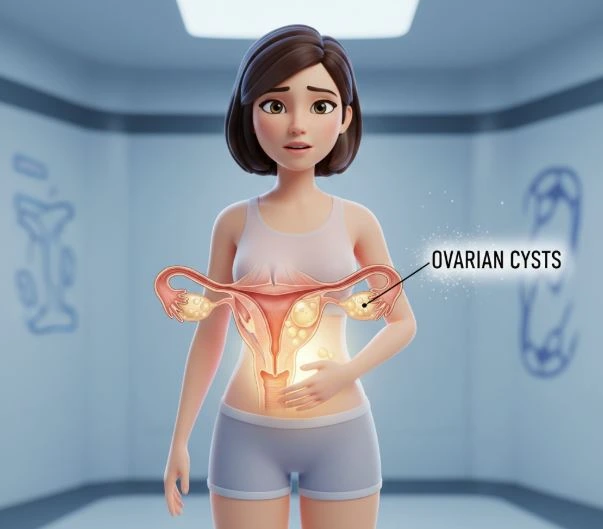
The ovarian cyst is a fluid-filled sac or many fluid-filled sacs which grow inside or over the ovary. In the majority of the cases, the ovarian cyst is harmless and gets resolved by itself without the woman knowing that she had the condition. However, in certain cases, the cyst fails to resolve on its own. Instead, it grows bigger and starts to affect or twist the ovaries. In this case, the woman experiences discomfort or pain in the lower abdomen or the pelvic region. A proper examination ensures an accurate diagnosis of the condition, which results in appropriate ovarian cyst treatment to reduce the cyst or ovarian cyst removal via surgery.
In some rare cases, these cysts develop into cancerous cysts and need an ovarian cyst surgery, such as laparoscopy, to remove the cancerous cyst from the ovary. If the cyst is large enough or is obstructing the vital organs of the body, then a private gynaecologist in London may suggest an open surgery to remove the cyst properly without harming other organs. This procedure is carried out by an expert surgical gynaecologist. So, let us discuss more on ovarian cyst removal, its types and ovarian cyst treatment options.
When Are Ovarian Cysts Cancerous?
Most ovarian cysts are non-cancerous, especially in premenopausal women. However, risk slightly increases:
- After menopause
- If cysts are solid rather than fluid-filled
- With family history of ovarian cancer
Doctors may recommend additional imaging or blood tests if malignancy is suspected.
Cyst Size: When Should You Worry?
- Less than 5 cm → Usually harmless
- 5–7 cm → Monitoring recommended
- More than 7 cm → Further evaluation needed
Size alone does not determine danger. Symptoms and appearance matter more
Ovarian Cysts vs. PCOS: What’s the Difference?
Many women confuse ovarian cysts with Polycystic Ovary Syndrome.
| Ovarian Cysts | PCOS |
| Usually one cyst | Multiple small follicles |
| Often temporary | Chronic hormonal condition |
| May cause pain | Often linked to irregular periods & weight gain |
| Usually resolves naturally | Requires long-term management |
PCOS is a metabolic and hormonal disorder not just cysts on the ovaries.
Emotional Impact of Ovarian Cysts
Chronic pelvic pain and hormonal imbalance can affect mental health, causing:
- Anxiety
- Mood swings
- Fatigue
- Reduced quality of life
If cysts are affecting your emotional well-being, seeking holistic support can be beneficial.
Exercise & Ovarian Cysts
Gentle exercise such as:
- Walking
- Stretching
- Low-impact yoga
may help reduce bloating and improve blood flow. However, avoid high-impact workouts if you have a large cyst, as intense movement may increase torsion risk
Symptoms of ovarian cyst
The common symptoms of ovarian cyst include:
- Abdominal swelling or bloating
- Uncomfortable or painful bowel symptoms
- Pelvic pain during the periods
- Pain around the thigh region
- Painful sexual intercourse
- Pain around the lower back region
- Nausea
- Breast tenderness
- Vomiting
The ovarian cyst could also be associated with other conditions or ailments, such as polycystic ovarian syndrome (PCOS). PCOS is a condition wherein more than one cyst or multiple cysts grows on the ovaries, causing discomfort and pain, and affecting the normal functioning of the ovary. In this condition, the patient experiences major hormonal imbalance, leading to lethargy, tiredness, acne, depression, difficulty in getting pregnant and weight gain. Over a period of time, these polycystic ovaries can also cause heart disease and diabetes. The primary signs of the polycystic ovarian syndrome are ovarian cysts.
The signs of PCOS include:
- Weight gain
- Acne
- Depression
- Fertility issues
- Irregular periods
- Thinning of hair in the scalp region
- Hair growth in the body
It usually happens when the body produces an increased number of male hormones, called androgens. The ovary produces this hormone in large quantities, which increases the amount of PCOS. If left untreated, it would affect the fertility of the woman. They would no longer ovulate, and there would be more acne and facial hair symptoms.
Ovarian cyst types
The ovarian cyst can be of different types. These include:
Dermoid cyst: Dermoid cyst is medically termed as a benign mature cystic teratoma. This cyst contains several diverse tissues, including hair and bone fragments. This cyst is formed through the cells within the egg which are stored inside the ovary. The cyst is very large — sometimes as long as 15 cm. The cyst is hereditary. So if there is a history of dermoid cyst in your family, then the risk of inheriting this condition becomes higher. However, dermoid cyst gets resolved by itself after some months and does not usually require medical intervention.
Endometriomas: This type of cyst occurs when a woman suffers from an ailment called endometriosis. This cyst develops from the endometrial tissue that is mainly found in the uterus. The cyst is often filled with blood and turns to brown colour as it dries, giving it the name of the chocolate cyst.
Cystadenomas: The cysts that form outside the ovary — for instance, over the stalk region — are called cystadenomas. The full medical name of the cyst is mucinous cystadenomas. The name is ascribed to the property of the cyst being filled with the mucus. The more advanced version of the cyst will contain a thin layer of fluids.
There are other types of cysts, as well. However, the ones listed above are the prevalent forms of the cyst which most women experience.
Ovarian cyst treatment
Most private gynaecologists recommend the wait-and-watch method for ovarian cyst treatment, as in most cases, the cyst gets resolved on its own after a few months. Most cysts shrink with time and become self-limiting. Plus, a few lifestyle changes could help prevent the occurrence of the cyst.
Increase your physical activity and do regular exercises — doing so will greatly help improve your hormonal balance. The best activity that you can do is walking. It is the most gentle form of full-body exercise, which burns more calories when done for longer periods consistently. Plus, walking also improves fitness as well as your cardiac health.
If you are into smoking, then you must quit smoking. Smoking increases the androgen levels in the body, which is the key contributor to the occurrence and development of different cysts. Also, it is important to maintain a healthy diet, get ample sunlight and a good night’s sleep.
You could use analgesics to fight discomfort in your abdominal area and to enhance the overall health. With time, the medications will help manage the symptoms of facial hair and acne.
If you want more information about ovarian cyst surgery, then you must visit the Well Women Clinic today.
FAQs
- What are the early signs of ovarian cysts?
Early signs may include mild pelvic pain, bloating, irregular periods, or discomfort during intercourse. However, many ovarian cysts cause no symptoms and are discovered during routine scans.
- Can ovarian cysts go away on their own?
Yes. Most functional ovarian cysts disappear naturally within 1–3 menstrual cycles without treatment. Your doctor may recommend monitoring with follow-up ultrasounds.
- How do I know if my ovarian cyst is serious?
Seek urgent medical care if you experience sudden severe pelvic pain, fever, dizziness, fainting, or vomiting. These may indicate rupture or ovarian torsion.
- Can ovarian cysts cause weight gain?
Ovarian cysts themselves rarely cause significant weight gain. However, hormonal conditions like Polycystic Ovary Syndrome (PCOS) may contribute to weight changes.
- Do ovarian cysts affect fertility?
Most ovarian cysts do not affect fertility. However, cysts linked to endometriosis or PCOS may impact ovulation and reproductive health if untreated.
- What size ovarian cyst requires surgery?
Cysts larger than 7 cm, persistent cysts, or those causing severe symptoms may require surgical removal. Your doctor will assess size, appearance, and symptoms before recommending surgery.
- Are ovarian cysts common?
Yes. Ovarian cysts are very common, especially in women of reproductive age. Most are harmless and resolve without complications.
- How are ovarian cysts diagnosed?
They are typically diagnosed using a pelvic ultrasound. In some cases, blood tests or additional imaging may be required.