



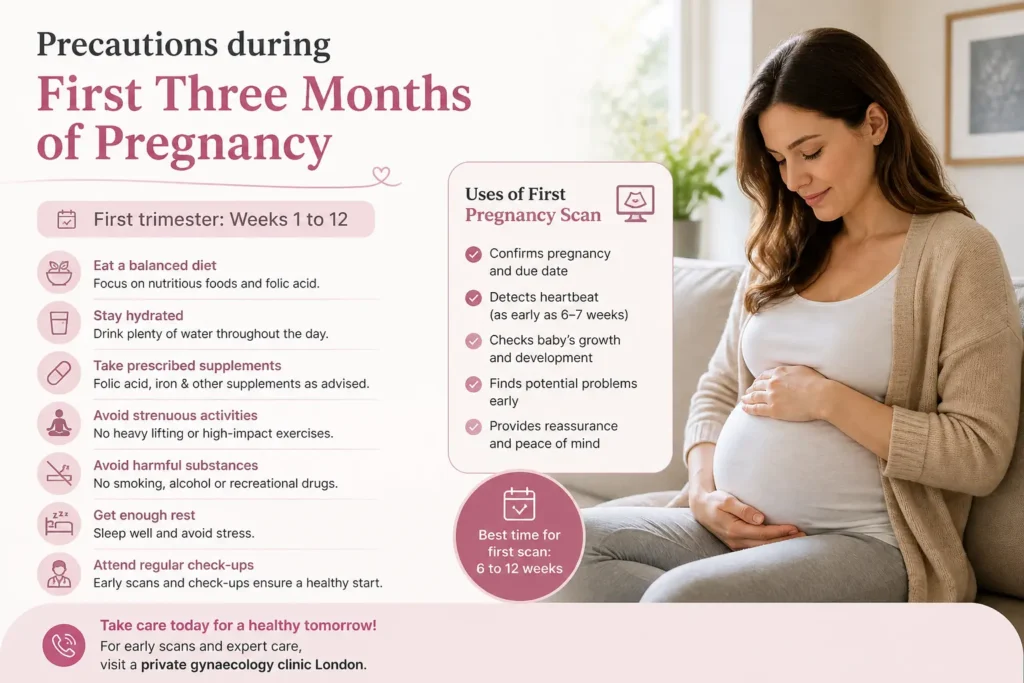
Pregnancy is a life-changing experience and if you are planning for pregnancy or you have just discovered that you are pregnant, you need to take various precautions to rule out any complications. The first trimester of pregnancy is the most crucial one, you have to be very careful during this time and follow some safety precautions to ensure the proper growth and development of your baby.
The first trimester is the most critical period for fetal development taking the right precautions protects both mother and baby.
The first trimester weeks 1 through 12 is arguably the most important phase of your entire pregnancy. During this period, all of your baby’s major organs and structures form. It is also, for many women, the most challenging time physically and emotionally. Knowing which precautions to take can make a significant difference to both your wellbeing and your baby’s healthy development.
At Well Women Clinic, our specialist team provides expert early pregnancy care to women across London and the surrounding areas. In this guide, we cover the most important steps every expectant mother should take in the first 12 weeks.
Precautions during First Three Months of Pregnancy
When you are pregnant, there are some basic precautions that you should take to ensure good health of you and your baby. You should keep in constant touch with a famous gynaecology clinic and take all the precautions as advised by your doctor.
Smoking
If you smoke, you have to quit smoking during your pregnancy for the well-being of your baby.
Alcohol
It is recommended that you avoid alcohol during the first trimester of your pregnancy. It is better to avoid alcohol during complete pregnancy to keep your baby away from any risk as a result of alcohol.
Prescribed medications
If you are on any type of medications, you should check with your doctor as soon as you are pregnant to find out whether the medications are safe to continue during pregnancy or not. You should not take any medicines without consultation form your doctor.
Food
The biggest thing to take care during the early months and even throughout your pregnancy is to eat healthy food for maintaining good health. You should ensure eating healthy diet and getting all nutrients for your baby. You should eat a balanced diet as advised by your doctor and be aware of what you are eating is safe.
Caffeine Intake
Caffeine affects iron absorption and so it is recommended that pregnant women should limit caffeine intake. Caffeine is found in coffee, chocolate and tea. So you should avoid intake of caffeine in any of these forms.
Managing Work Stress
It is important to manage your work stress, especially during early pregnancy. The first three months are very crucial for the baby’s development so you should rest as much as possible and avoid any type of stress. Also, if you work in a place where there can be potential hazard to your baby then you should avoid going to such a place.
Travelling
You should avoid travelling during the first trimester and if it is important to travel, you should speak with your doctor before making any travel plan. It does not cause a concern throughout most of your pregnancy.
Further Steps
- Book an Early Pregnancy Consultation and Scan
As soon as you have a positive pregnancy test, book a professional consultation. An early pregnancy scan at 6–10 weeks will confirm the pregnancy is viable, correctly located within the uterus, and developing as expected. It will also provide your first accurate estimated due date.
Booking an early consultation with a private gynaecologist in London gives you expert oversight from the very start of your pregnancy.
- Start Taking Folic Acid Immediately
Folic acid is the single most important supplement in early pregnancy. Taking 400mcg daily for the first 12 weeks significantly reduces the risk of neural tube defects such as spina bifida. Ideally, you should start taking folic acid as soon as you begin trying to conceive. Some women with higher risk factors (previous neural tube defect, BMI above 30, diabetes, or taking anti-epileptic medication) may be advised to take a higher dose of 5mg always discuss this with your doctor.
A good-quality prenatal vitamin will usually include folic acid, vitamin D (recommended at 10mcg/day throughout pregnancy), and other key nutrients including iron and iodine.
- Maintaina Balanced, Pregnancy-Safe Diet
Good nutrition is foundational in the first trimester. Focus on a varied diet rich in:
- Folate-rich foods: Dark leafy greens (spinach, kale), lentils, chickpeas, and fortified cereals
- Lean protein: Chicken, eggs (well cooked), beans, and pulses
- Calcium sources: Dairy products, fortified plant milks, almonds
- Iron-rich foods: Red meat (well cooked), dark leafy vegetables, tofu
- Omega-3 fatty acids: Salmon, mackerel, walnuts (avoid high-mercury fish like shark, swordfish, and marlin)
Foods to avoid in the first trimester include:
- Raw or undercooked meat, fish, and seafood (risk of listeria and toxoplasmosis)
- Unpasteurised cheese and dairy (soft cheeses such as brie, camembert, and blue cheese)
- Liver and liver products (high vitamin A content can harm fetal development)
- Alcohol no safe level is established in pregnancy
- Excess caffeine limit to under 200mg per day (roughly one mug of filtered coffee)
- Stop Smoking and Avoid Alcohol
Smoking during pregnancy is associated with miscarriage, preterm birth, low birth weight, and stillbirth. Alcohol consumption even in small amounts can affect fetal brain development and increases the risk of foetal alcohol spectrum disorders. The safest approach is complete abstinence from both from the moment you discover you are pregnant.
- Know Which Medications Are Safe
Many over-the-counter and prescription medications are not safe during pregnancy. Before taking any medication including paracetamol always check with your doctor or pharmacist. Avoid NSAIDs such as ibuprofen and aspirin (unless prescribed) and do not take herbal remedies without professional guidance.
If you have a pre-existing medical condition requiring ongoing medication, speak with your gynaecologist or GP urgently so your treatment can be reviewed and safely managed throughout pregnancy.
- Get Adequate Rest and Manage Stress
Extreme fatigue is one of the most universal first trimester symptoms, caused by the surge in progesterone and the enormous energy demands of early fetal development. Prioritise sleep, take rest breaks during the day where possible, and accept help when it is offered. Chronic stress, meanwhile, can have physiological effects during pregnancy techniques such as mindfulness, gentle yoga, and talking therapies can all be beneficial.
Adequate rest and stress management are underrated but vital first trimester precautions.
- Exercise Gently and Safely
Gentle to moderate exercise is generally safe and beneficial in the first trimester. Regular physical activity helps manage weight, reduces the risk of gestational diabetes, improves mood, and can ease common symptoms like constipation and fatigue. Good options include:
- Walking
- Swimming
- Prenatal yoga or Pilates
- Low-impact aerobics
Avoid contact sports, heavy weightlifting, exercising in excessive heat (e.g., hot yoga), and any activity with a risk of falling or abdominal impact. If you were exercising before pregnancy, you can usually continue at a similar level reduce intensity if needed and always listen to your body.
- Attend All Recommended Antenatal Appointments
Even if you feel well, first trimester antenatal appointments are not optional. They include blood tests for anaemia, blood group, rubella immunity, HIV, syphilis, and hepatitis B. If you are using private maternity care, early consultations at Well Women Clinic ensure that your personal risk factors are assessed and addressed from the outset. For women with a history of miscarriage, we strongly recommend our Recurrent Miscarriage Testing service.
- Know Your Warning Signs
The following symptoms require immediate medical attention in the first trimester:
- Heavy vaginal bleeding
- Severe one-sided pelvic or abdominal pain (possible sign of ectopic pregnancy)
- High temperature or fever above 38°C
- Severe vomiting preventing any food or fluid intake (hyperemesis gravidarum)
- Fainting or dizziness
- Painful urination (possible UTI, which carries risks in pregnancy)
- Choose the Right Healthcare Provider
Having access to a skilled, experienced gynaecologist and obstetrician throughout your pregnancy gives you the best possible foundation. When choosing a private gynaecologist in London, look for specialist expertise in early pregnancy complications, access to diagnostic facilities, and availability for prompt appointments when concerns arise.
Visiting doctor regularly and getting complete health checkup and early pregnancy scan
During the first trimester, you should visit your doctor regularly, get your complete health checkup done and talk to your doctor about the required immunizations and what impact they can have on your unborn baby. Early pregnancy scan is a must and you should ensure to get it done for good health of your baby and to rule out any complications.
If you discover you are pregnant, then you should immediately seek a visit to an eminent clinic like Well Women Clinic to get guidance and supervision from expert doctors.
Frequently Asked Questions
What should I avoid during the first trimester of pregnancy?
During the first trimester, you should avoid alcohol, smoking, raw or undercooked meat and seafood, unpasteurised cheeses, high-mercury fish, excess caffeine (keep below 200mg/day), and medications not approved by your doctor. You should also avoid contact sports or heavy lifting without medical guidance.
Which folic acid dose is recommended in the first trimester?
The NHS recommends 400 micrograms (mcg) of folic acid daily during the first 12 weeks of pregnancy. Women with certain risk factors may be advised to take a higher dose of 5mg – always consult your doctor.
Is it safe to exercise in the first trimester?
Yes, gentle to moderate exercise is generally safe and beneficial in the first trimester. Activities such as walking, swimming, yoga, and Pilates are excellent choices. Avoid contact sports and high-impact activities.
What are the most common first trimester symptoms?
Common first trimester symptoms include nausea and vomiting (morning sickness), breast tenderness, fatigue, frequent urination, food aversions or cravings, mild pelvic cramping, and light spotting (implantation bleeding). See our guide on 5 early pregnancy symptoms to look out for.
When should I see a gynaecologist in the first trimester?
You should book an appointment with a gynaecologist as soon as you have a positive pregnancy test ideally within the first 6–8 weeks. Well Women Clinic offers private early pregnancy consultations in London with no referral needed. Book your appointment here.
Can stress harm my baby in the first trimester?
Chronic, severe stress may be associated with adverse pregnancy outcomes, so managing stress is important. Mindfulness, gentle exercise, adequate rest, and speaking to a supportive healthcare provider can all help.