



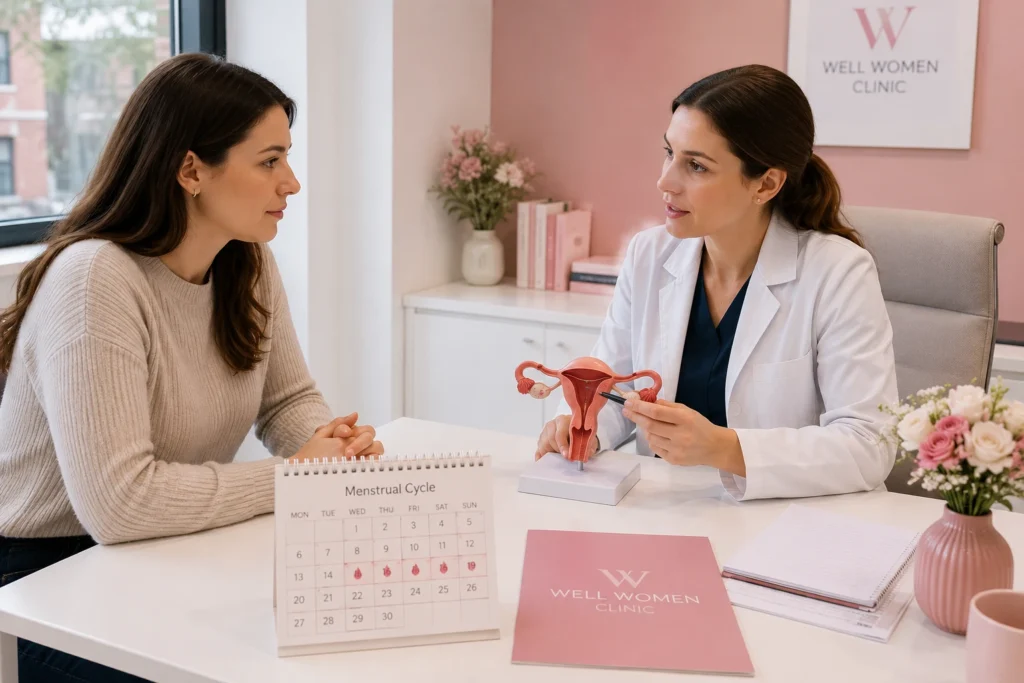
Polycystic Ovary Syndrome (PCOS) is one of the most common hormonal conditions affecting women of reproductive age. While many people associate PCOS with irregular or missed periods, it can also lead to heavy menstrual bleeding in some women. If you have been searching for a cure for heavy periods, it is important to understand whether an underlying condition such as PCOS could be the cause.
At Well Women Clinic, our consultant-led team provides personalised assessment and treatment for women experiencing heavy periods, irregular cycles, and other symptoms associated with PCOS. Early diagnosis can help you manage symptoms effectively and protect your long-term health.
What Is PCOS?
PCOS (Polycystic Ovary Syndrome) is a hormonal disorder that affects how the ovaries function. Women with PCOS often have an imbalance of reproductive hormones, which can interfere with regular ovulation.
Although the exact cause is unknown, several factors may contribute, including:
- Genetics
- Insulin resistance
- Hormonal imbalance
- Increased androgen (male hormone) levels
- Lifestyle and environmental factors
PCOS affects every woman differently. Some may experience mild symptoms, while others require ongoing medical support.
Can PCOS Cause Heavy Periods?
Yes. Although PCOS is commonly associated with infrequent periods, it can also result in heavy menstrual bleeding.
When ovulation does not occur regularly, the lining of the uterus continues to build up over time. Eventually, when menstruation occurs, the thicker lining sheds, leading to:
- Heavy bleeding
- Large blood clots
- Longer-lasting periods
- Increased menstrual pain
Women may therefore experience months without a period followed by unusually heavy bleeding.
Common Symptoms of PCOS
Alongside heavy periods, PCOS may cause:
- Irregular menstrual cycles
- Missed periods
- Excess facial or body hair
- Acne or oily skin
- Weight gain
- Difficulty losing weight
- Thinning scalp hair
- Fertility difficulties
- Mood changes
- Fatigue
Not every woman experiences all these symptoms, which is why professional assessment is essential.
When Should Heavy Periods Be Investigated?
Heavy periods should never be ignored, particularly if they begin affecting your daily life.
You should seek medical advice if you:
- Bleed for longer than seven days
- Need to change sanitary protection every one to two hours
- Pass large blood clots regularly
- Experience severe pelvic pain
- Feel unusually tired or dizzy
- Develop symptoms of anaemia
- Have irregular periods with heavy bleeding
Heavy bleeding can have several causes besides PCOS, including fibroids, adenomyosis, endometriosis, thyroid disorders and uterine polyps.
How Is PCOS Diagnosed?
Diagnosis involves reviewing your medical history, symptoms and menstrual pattern.
Your consultant may recommend:
Medical History
Your menstrual cycle, symptoms and family history are discussed in detail.
Physical Examination
A general health assessment may identify signs such as acne, excess hair growth or weight changes.
Blood Tests
Hormone tests help assess:
- Testosterone
- LH and FSH
- Thyroid function
- Blood sugar levels
- Insulin levels
Pelvic Ultrasound
An ultrasound scan can identify the appearance of polycystic ovaries while also ruling out other conditions that may be causing heavy bleeding.
Is There a Cure for Heavy Periods Caused by PCOS?
There is no permanent cure for heavy periods, but there are highly effective treatments that can control symptoms and significantly reduce heavy menstrual bleeding.
Treatment depends on:
- Your age
- Whether you wish to become pregnant
- Your overall health
- Severity of symptoms
- Future fertility plans
At Well Women Clinic, treatment plans are tailored to each woman’s individual needs.
Treatment Options for Heavy Periods Associated with PCOS
Lifestyle Changes
For many women, lifestyle modifications play a significant role in improving PCOS symptoms.
These may include:
- Maintaining a healthy weight
- Regular physical activity
- Balanced nutrition
- Managing stress
- Improving sleep quality
Even modest weight loss may help regulate hormones and improve menstrual cycles.
Hormonal Treatment
Hormonal medication can help regulate periods and reduce heavy bleeding.
Your consultant may recommend:
- Combined oral contraceptive pill
- Hormonal intrauterine system (IUS)
- Cyclical progesterone therapy
These treatments also help protect the lining of the womb.
Medication for Heavy Bleeding
Depending on your symptoms, medication may be prescribed to reduce menstrual blood loss and improve quality of life.
Managing Insulin Resistance
Some women benefit from medications that improve insulin sensitivity, which may help restore more regular ovulation.
Fertility Treatment
If pregnancy is your goal, treatment focuses on encouraging regular ovulation.
Options may include:
- Ovulation induction medication
- Fertility monitoring
- Specialist fertility support when required
Can Untreated PCOS Lead to Other Health Problems?
Without appropriate management, PCOS may increase the risk of:
- Type 2 diabetes
- High blood pressure
- High cholesterol
- Endometrial hyperplasia
- Endometrial cancer
- Infertility
- Anxiety and depression
Regular follow-up helps reduce these long-term risks.
How Can Heavy Periods Affect Daily Life?
Heavy menstrual bleeding can impact both physical and emotional wellbeing.
Many women report:
- Fatigue from blood loss
- Iron-deficiency anaemia
- Reduced productivity at work
- Difficulty participating in social activities
- Sleep disruption
- Increased anxiety about unexpected bleeding
If heavy periods are affecting your quality of life, specialist assessment can help identify the underlying cause and provide appropriate treatment.
How Well Women Clinic Can Help
At Well Women Clinic, our experienced consultant private gynaecologists in London provide compassionate, evidence-based care for women experiencing heavy periods and PCOS.
We offer:
- Comprehensive assessment
- Hormone investigations
- Pelvic ultrasound referral
- Personalised treatment plans
- Fertility advice
- Long-term PCOS management
- Ongoing follow-up and support
Our goal is to help every patient understand her condition and receive treatment that suits her health goals and lifestyle.
Frequently Asked Questions
Can PCOS cause very heavy periods?
Yes. Irregular ovulation can cause the womb lining to build up over time, resulting in heavier bleeding when menstruation occurs.
Is heavy bleeding always caused by PCOS?
No. Heavy periods may also result from fibroids, endometriosis, adenomyosis, thyroid disorders, polyps or other gynaecological conditions. A proper assessment is important.
Can PCOS be cured permanently?
There is currently no permanent cure for PCOS. However, symptoms can often be managed successfully through lifestyle changes, medication and personalised medical care.
Should I see a specialist for heavy periods?
Yes. If your periods are unusually heavy, prolonged or interfering with daily life, it is advisable to consult a gynaecologist to determine the underlying cause and discuss suitable treatment options