


If you’ve ever paused and asked, “Is this spotting or my period?”, you’re not alone; here’s a clear way to know.
Many women experience light bleeding at unexpected times, and it often raises the same question: Is it spotting or the start of a period? Understanding the difference between spotting and a period can help you track your cycle more accurately and avoid unnecessary worry. It also gives you a clearer picture of what your body is trying to tell you.
These small changes may look similar, but they often happen for very different reasons. When you know what each type of bleeding means, it becomes easier to follow your cycle, notice patterns, and understand what’s normal for you.
What Is Spotting?
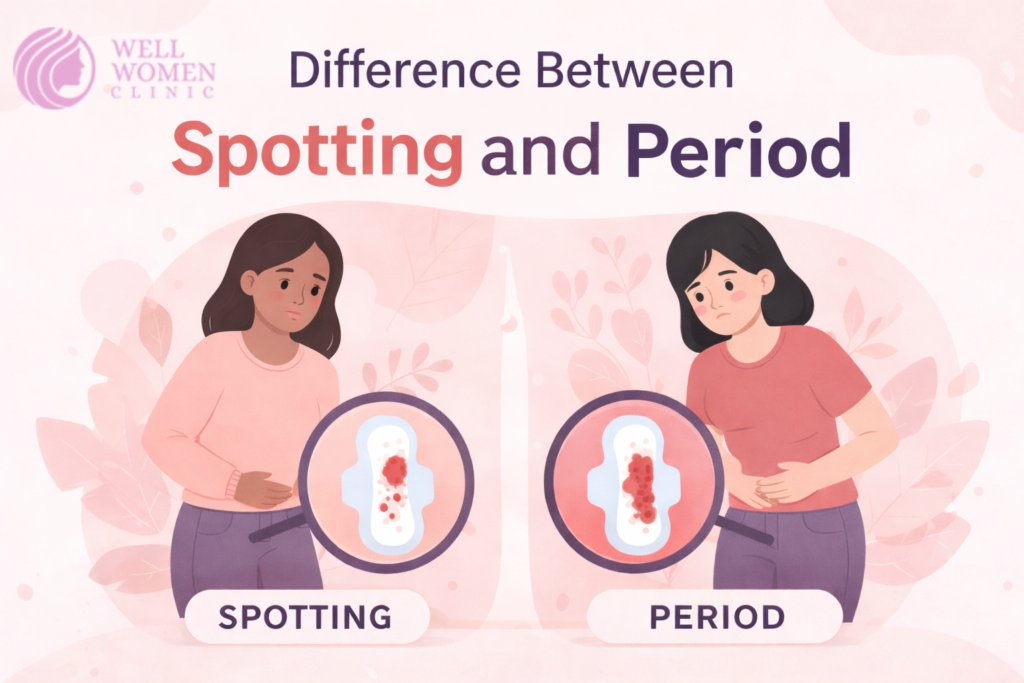
Spotting is slight bleeding that can occur between your monthly cycle. It is usually very mild and does not feel like a normal flow. Many women notice it as tiny dots or streaks on their underwear, tissue, or liner.
Many women mix it up with a light period, making spotting vs period hard to tell apart.
How Spotting Usually Looks
- Very light flow
- Pink, brown, or rust-like colour
- No clots
- Often just a few drops
Common Times When Spotting Appears
- A few days before your period
- Around ovulation
- After intercourse
- When starting or changing contraception
- During stressful days
What Spotting Feels Like
- Usually no cramps
- No heaviness in the abdomen
- Short duration, often a few hours or a day
Spotting is generally mild, short, and easy to miss. Noticing when it shows up helps you better understand your cycle.
What Is a Period?
A period is your body’s way of shedding the lining of the uterus every month. This is a natural part of the menstrual cycle and usually comes with a steady flow of blood. Unlike spotting, a period has a clear start, builds up in flow, and lasts for a few days.
Many women compare their period to a monthly routine because it follows a predictable pattern. This makes it easier to see when something feels different from your usual cycle, especially when you’re trying to understand spotting vs period changes.
How a Period Usually Looks
- Moderate to heavy flow
- Bright red or deep red colour
- May include small clots
- Clear start and end days
What a Period Feels Like
- Cramps or lower belly discomfort
- Backache or heaviness
- Mood changes
- Tiredness or bloating
How Long Does a Period Last
- Usually, 3 to 7 days
- Flow often starts light, becomes heavier, then slows down
Your period is a regular part of your cycle, and knowing its usual pattern helps you notice any unusual changes. Women experiencing discomfort or heavy bleeding may consider exploring heavy periods treatment London for support and relief.
Key Differences Between Spotting and Period Bleeding
Even though both involve bleeding, they each have very different signs. Knowing these small changes helps you understand spotting vs period more clearly.
1. Colour
- Spotting: Pink, light brown, or rust-like
- Period: Bright red or deep red
2. Flow
- Spotting: Very light, often a few drops
- Period: Steady flow that increases and decreases over days
3. Timing
- Spotting: Can happen anytime during the cycle
- Period: Follows a monthly pattern, arriving around the same time each cycle
4. Cramps
- Spotting: Usually, no pain or only very mild discomfort
- Period: Commonly brings cramps, heaviness, or lower back pain
5. Duration
- Spotting: A few hours or 1–2 days
- Period: Lasts 3 to 7 days
6. Other Signs
- Spotting: May appear after intercourse, stress, or hormonal shifts
- Period: Often comes with mood changes, bloating, or tiredness
These small differences help you identify what your body is signalling and track your cycle more confidently.
Common Reasons for Spotting
Spotting can happen for many harmless reasons. Most of the time, it shows up because your body is responding to small hormonal shifts or routine cycle changes. Here are some common situations where spotting can appear:
- Ovulation
- Hormonal Changes
- Early Pregnancy
- Contraception
- Stress
- Missed or Irregular Periods
- After Intercourse
- Other Mild Causes
Spotting by itself is often not a concern, but noticing when it occurs helps you better understand your cycle. Women who experience irregular or heavy bleeding may benefit from consulting a professional to discuss a cure for heavy periods.
When Spotting Could Be a Sign to Check with a Doctor
Spotting is usually mild and harmless, but there are times when it can be a sign that your body needs attention. It’s always better to stay aware and reach out to a doctor if something doesn’t feel normal for you.
Signs You Shouldn’t Ignore
- Spotting that continues for several days
- Spotting keeps coming back between every cycle
- Heavy spotting instead of light drops
- Spotting after intercourse that happens repeatedly
- Bleeding with pain, dizziness, or discomfort
- Spotting along with unusual discharge or a strong smell
When to Seek Medical Advice
- If spotting comes with strong cramps
- If your periods suddenly become very irregular
- If you have missed periods for months and spotting replaces your regular cycle
- If spotting appears after menopause
- If you feel something is off, even when the bleeding is light
Spotting becomes important to check when it looks unusual, feels different from your normal pattern, or is accompanied by other symptoms. Seeking early guidance on heavy periods treatment London can help prevent complications and ensure your cycle remains healthy.
When Your Period Might Not Be Regular
Irregular periods are common, and many women experience them at some point in their lives. An irregular period means your cycle does not follow its usual timing, flow, or pattern. This can make it harder to predict when your next period will arrive.
Common Reasons for an Irregular Period
- Hormonal shifts
- Stress
- Contraception
- Lifestyle factors
- Health conditions
- Early stages of puberty or perimenopause
What Irregular Periods May Look Like
- The period comes earlier or later than usual
- Flow changes from light to heavy without a clear reason
- Cycles are longer or shorter than normal
- Skipping a month occasionally
Irregular periods often settle on their own, but keeping track of your pattern helps you notice when something feels unusual. For women experiencing severe discomfort, understanding options for a cure for heavy periods can be empowering.
How to Track These Changes at Home
Tracking your cycle helps you understand what’s normal for your body and when something feels different. It also makes it easier to notice changes between light spotting and your regular period.
Simple Ways to Track Your Cycle
1. Use a Calendar
2. Try a Period-Tracking App
3. Note Flow Changes
4. Track Symptoms
5. Pay Attention to Timing
6. Observe Colour and Texture
Keeping these small details recorded helps you understand your cycle better and makes it easier to spot any new or unusual changes early.
“Understanding the small differences between light spotting and a regular period helps you stay more aware of your cycle and what your body is trying to tell you. These signs become much easier to track once you know what each type of bleeding looks and feels like.
Well Women Clinic, our team focuses on helping women understand their health with more clarity, and we make this information simple, supportive, and easy to follow. When you recognise these small changes, it becomes easier for us to guide you with the right care whenever you need it.
Noting your usual cycle patterns, staying mindful of what feels different, and seeking help when something doesn’t seem right can go a long way in protecting your overall well-being. If you are looking for expert guidance, consulting a gynaecologist specialist in London can provide personalised care and solutions.”